
Meta Description: Humanoid robots in 2026 are taking a new direction. Meet Sprout by Fauna Robotics, the friendly AI powered robot designed to live and work alongside people in everyday spaces.
It should come as no surprise. The next few years belong to AI and robots. They are going to spread the way computers did, from concept, to R&D, to manufacturing, to practically every home. I can see it happening. So on that note, meet Sprout. He literally sprouted out of nowhere and made a quiet but confident entrance in January 2026, really trying to live up to his name. Built by Fauna Robotics, Sprout drew inspiration from some of our favourite fictional robots: Baymax, BB-8, and Wall-E. And honestly? That is exactly the point.
What Is Sprout and Why Does It Matter?
Sprout is a humanoid robot built by Fauna Robotics, a New York based startup founded by engineers who previously worked at Meta, Google DeepMind, and CTRL Labs. It launched out of stealth on January 27, 2026, and it is already shipping as a Creator Edition to developers, researchers, and organisations ready to build with it.
But here is what makes Sprout stand out in a crowded field. The race to build humanoid robots has largely been a race toward power, speed, and industrial output. Most of the big names in robotics today, think Tesla Optimus, Figure AI, and Agility Robotics, are chasing factory floors, warehouses, and logistics contracts. The design priorities reflect that. Strong, efficient, built to perform.
Fauna Robotics looked at that landscape and went in a completely different direction. Rather than optimising for industrial output, they asked a quieter but equally important question: what if we built a robot that people actually wanted to be around?
Designed to Be Liked, Not Just Useful

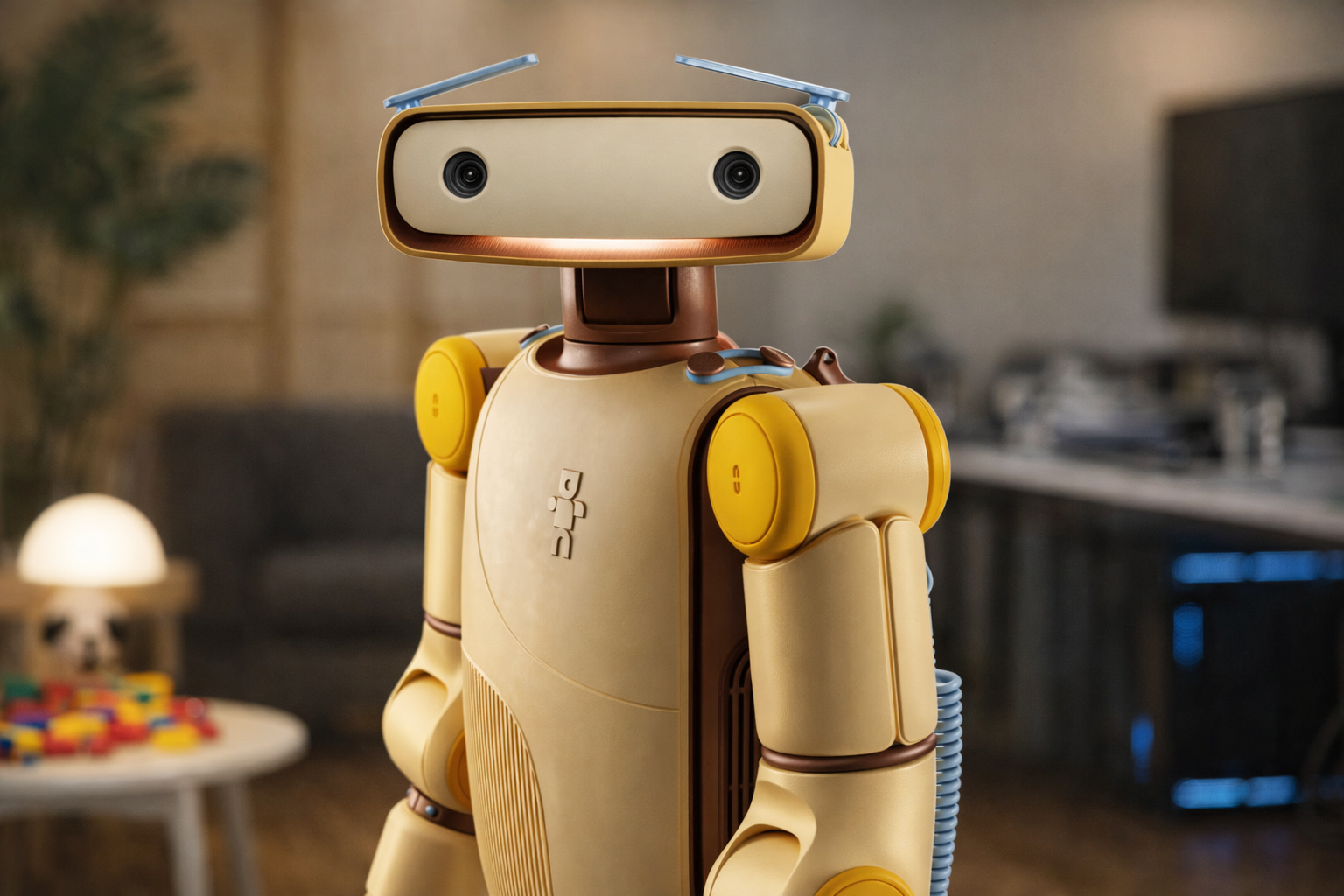
Sprout stands 3.5 feet tall and weighs about 50 pounds. It has a soft exterior, no sharp edges, and motors designed to yield to external force rather than push through it. A dedicated safety subsystem monitors real time conditions across all mechanical and software levels. In plain terms, if Sprout bumps into you or a child runs into it, nobody gets hurt.
But the design goes beyond physical safety. Sprout expresses emotion through articulated eyebrows, LED facial displays, and body language. It can hold a conversation using voice commands, wave hello, dance, kneel, and even jump. The Fauna team has been deliberate about building a robot that feels alive rather than mechanical.
Their VP of Hardware Anthony Moschella, a former Peloton executive, put it well: robots like Baymax, BB-8, and Wall-E taught us that approachability does not come from looking human. It comes from feeling alive. That design philosophy is baked into every part of Sprout.
Also Read:
Where Is Sprout Being Used Right Now?
This is where things get interesting. Sprout is not a concept or a lab experiment. It is already in the hands of some significant early customers including Disney, Boston Dynamics, UC San Diego, and NYU. These organisations are exploring applications across retail, entertainment, education, and home services.
Hotels are reportedly in conversations to deploy Sprout as a guest service assistant. Universities are using it to research human and robot interaction. Disney, which has operated robots at its theme parks for years, has signed on as an early buyer, which says a lot about where the entertainment industry sees this going.
The CEO of Fauna Robotics, Rob Cochran, drew a fascinating comparison to the early days of personal computing. Before the Apple II and the invention of BASIC, software development was limited to a tiny community of specialists. Once you had the right abstraction layer, application developers emerged, interesting products followed, and the market exploded. Cochran believes humanoid robotics is sitting at exactly that moment right now.
What Does Sprout Cost?
The Creator Edition is priced at $50,000. That puts it out of reach for most individuals today, but it is not aimed at individuals yet. It is aimed at developers, researchers, and organisations building the applications that will eventually make robots like Sprout as familiar as a tablet or a smart speaker.

For context, Chinese robotics company Unitree sells comparable humanoids for entertainment and research starting under $20,000, though fully equipped versions reach similar price points. Sprout is positioning itself as a premium but accessible platform, sitting between hobbyist hardware and the six figure industrial machines that dominate the current market.
The fact that it is manufactured in the United States with domestic support is also a deliberate choice, reflecting both security considerations and the value of tight feedback loops in hardware development.
Why This Matters for the Rest of Us
You might be reading this thinking, interesting, but what does a $50,000 developer robot have to do with me?
More than you might expect.

We are watching the early chapters of a shift that will eventually touch almost every part of daily life. The deployment gap, which is the problem of moving robots from controlled lab environments into real human spaces, has been one of the biggest blockers in robotics for decades. Sprout is a direct attempt to close that gap.
Think about it this way. In 2026, over 80 percent of the global workforce is in services, not manufacturing. Healthcare, education, hospitality, and eldercare are all facing labour shortages that are only going to deepen. The economic pressure to find solutions is real and growing.
Robots like Sprout are not being built to replace people wholesale. They are being built to work alongside us in the spaces where we spend most of our time. The vision is not a robot army. It is something much closer to a useful, friendly presence that handles specific tasks so humans can focus on the ones that actually require human judgment, creativity, and connection.
The Future Is Already Here
Personally, I have set myself a goal of getting my first personal robot before the year is out.
Sprout is not the finished product. It is the starting point. Just as the first personal computers were expensive, limited, and mostly used by developers and enthusiasts, the robots making headlines in 2026 are laying the groundwork for what comes next.
The question is not whether humanoid robots will become part of everyday life. Based on the trajectory we are on, that feels increasingly inevitable. The more interesting question is how quickly the technology earns enough trust to move from research labs and hotel lobbies into the broader spaces where people live and work.
If you have been following this space, you might remember I wrote back in November 2025 about 2026 being the year robots finally start coming home. Sprout is early evidence that prediction is aging well. Personally, I have set myself a goal of getting my first personal robot before the year is out. Whether Sprout makes the shortlist remains to be seen at $50,000, but the market is moving fast and there are more options emerging every month.
I am putting together a full breakdown of consumer robots available in 2026, complete with specs, price tags, and who each one is actually for. Subscribe to the August Wheel newsletter below and you will get a copy the moment it drops.



Leave a Reply