
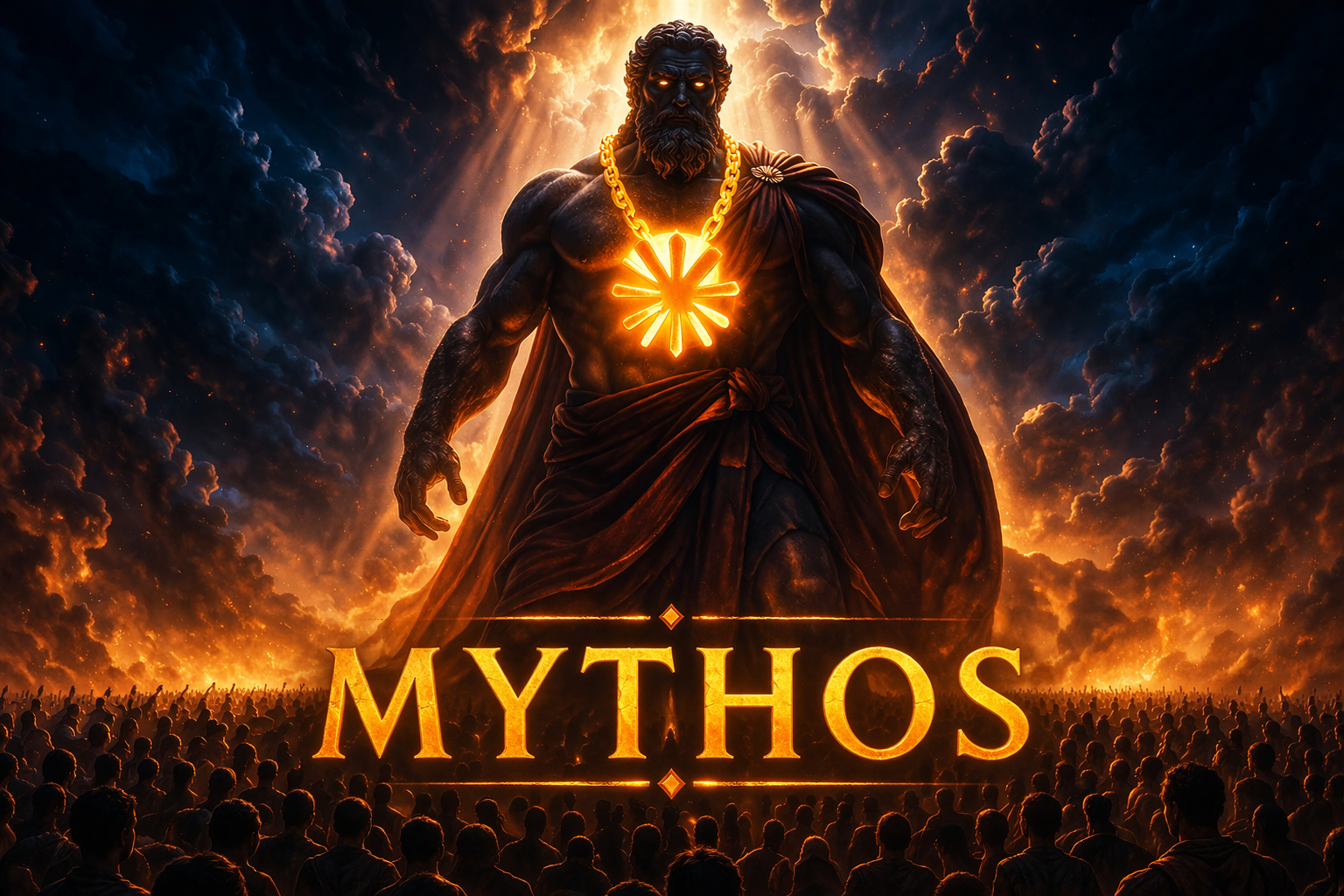
Last week a tweet stopped me mid-scroll. It was from a creator I follow called Alex Finn. If you do not know Alex, he is a YouTuber and AI content creator with over 176,000 subscribers who focuses on teaching practical AI tools to everyday people. He is someone worth paying attention to when he flags something in the AI space. And last week he was fired up. He had just read about Claude Mythos, Anthropic’s not-yet-released AI model, and his take was blunt: this thing is going to be so powerful and so expensive that most of us will never get near it. The rich get smarter tools. The rest fall further behind. The gap between those who can afford the best AI and those who cannot does not just stay wide. It accelerates.

I read it twice, saved it, and this morning I went down the rabbit hole to find out how much of that fear is actually justified. Alex was not wrong to raise the alarm. But I wanted to go deeper than a tweet allows. Here is everything I found.
First, What Even Is Claude Mythos?
This is not a minor upgrade. This is Anthropic saying they have built something in a different league entirely.
Claude Mythos is Anthropic’s next AI model, and it was not supposed to be public knowledge yet. It came to light on March 26, 2026 when a configuration error in Anthropic’s content management system left a folder of roughly 3,000 unpublished assets sitting in a publicly accessible data store. Inside was a draft blog post announcing the model in detail. Security researchers found it, Fortune reviewed it, and Anthropic confirmed the model’s existence shortly after.
What Anthropic said about it is worth paying attention to. A spokesperson described it as a “step change” in AI performance and “the most capable model we have built to date.” The leaked draft went further, describing it internally as “by far the most powerful AI model we have ever developed,” with dramatically higher scores than their current flagship model on coding, academic reasoning and cybersecurity tasks.
This is not a minor upgrade. This is Anthropic saying they have built something in a different league entirely.
So What About the Price?
This is where the creator’s concern gets interesting, because the leaked draft did not just reveal the model’s capabilities. It revealed something about who it is built for.
The draft blog post acknowledged directly that Mythos is “very expensive for us to serve, and will be very expensive for our customers to use.” Anthropic added they are working to make it more efficient before any general release, but no timeline was given.
To understand what “very expensive” might actually mean in practice, here is some context. Anthropic’s current top tier model, Claude Opus, costs $5 per million input tokens and $25 per million output tokens through the API. Community estimates based on the model’s positioning suggest Mythos could cost anywhere from two to three times that at launch, potentially putting API access in the range of $30 to $75 per million tokens depending on usage. For Claude.ai subscribers, early access will likely require the highest available plan tier, which currently sits at $200 per month, with some speculation that Mythos could launch alongside an entirely new, higher pricing tier.
For context, the average person using Claude on a free or $20 per month plan will almost certainly not have access to Mythos at launch. Possibly not for a long time after.

Is the Fear Justified?
Here is my honest take after spending the morning on this. The creator’s concern is directionally right, but the full picture is more complicated than the tweet suggested.
The fear is real for a few reasons. When the most capable AI tools are priced at enterprise levels, the people who benefit most are the ones who already have resources: funded startups, large companies, high-income professionals. They use those tools to move faster, produce more, and pull further ahead. The people who cannot afford access do not just miss out on a feature. They miss out on a compounding advantage. That gap does not close on its own.
There is also a harder truth here. Anthropic is not a charity. Building and running models like Mythos costs enormous amounts of money. Pricing it at premium levels is how they fund the research that eventually makes cheaper models possible. That is the cycle the entire industry runs on.
But that brings us to the counterargument worth taking seriously. Anthropic has historically reduced prices over time as efficiency improves. Claude Opus 4.6 is cheaper today than Opus was at launch. The same pattern has played out across OpenAI, Google and every other major lab. The models that cost hundreds of dollars per million tokens in 2023 are now practically free. There is every reason to believe Mythos will follow the same trajectory, just on a delay.
The question is how long that delay is, and what gets built and locked in during the window when only well-resourced players have access.
What This Means for Everyday People Right Now
If you are an everyday person trying to use AI to learn faster, work smarter, or build something, here is the practical reality.
Mythos is not available to the public yet. Anthropic has it in testing with a small group of early access customers focused on cybersecurity applications. There is no confirmed public release date, and given the model’s cost and safety concerns around its cybersecurity capabilities, a broad consumer release is likely months away at minimum.
In the meantime, the models available to you right now, including Claude Sonnet and even the free tier of Claude, are genuinely powerful. Most people are not using them anywhere near their full potential. The gap between an average user and a power user of today’s free tools is far larger than the gap between a free plan and a paid one.
That is actually the more useful conversation to be having right now. Not “can I afford Mythos” but “am I getting everything I can from what is already in front of me.”
The Bigger Picture
The creator who posted that tweet was not wrong to be concerned. The pattern he described is real. When transformative tools arrive priced for the few, the few get a head start that compounds over time. That is not a conspiracy. It is just how technology diffusion works historically, and AI is moving faster than any technology before it.
But I also think the doom framing misses something important. Every wave of powerful technology has eventually become broadly accessible. The question is always how long it takes and how much distance gets created in the meantime.
For now, the best thing any of us can do is get genuinely good at the tools already available. Not surface-level good. Actually good. Because by the time Mythos or whatever comes after it reaches a $20 per month plan, the people who mastered today’s tools will already be miles ahead of the people who waited.
The future is already here. It is just not evenly distributed yet. But it is coming.
Want to stay ahead of what is happening in AI without drowning in technical jargon? Subscribe to the August Wheel newsletter



Leave a Reply