
TLDR:
- Consumer robots like 1X NEO, Tesla Optimus, and Figure AI shipping in 2026 will create new job categories, not just replace existing ones
- History shows every major technology—cars, computers, smartphones—eliminates some jobs but creates entirely new industries
- Five immediate job opportunities: Robot Setup Specialists, Maintenance Technicians, Data Security Consultants, Integration Experts, and Remote Operators
- These aren’t factory jobs—they’re service roles in homes and small businesses, similar to how IT support emerged with personal computers
- The skills gap is massive: plumbers can’t troubleshoot robots, most IT people don’t understand robotics—creating opportunity for those who bridge both
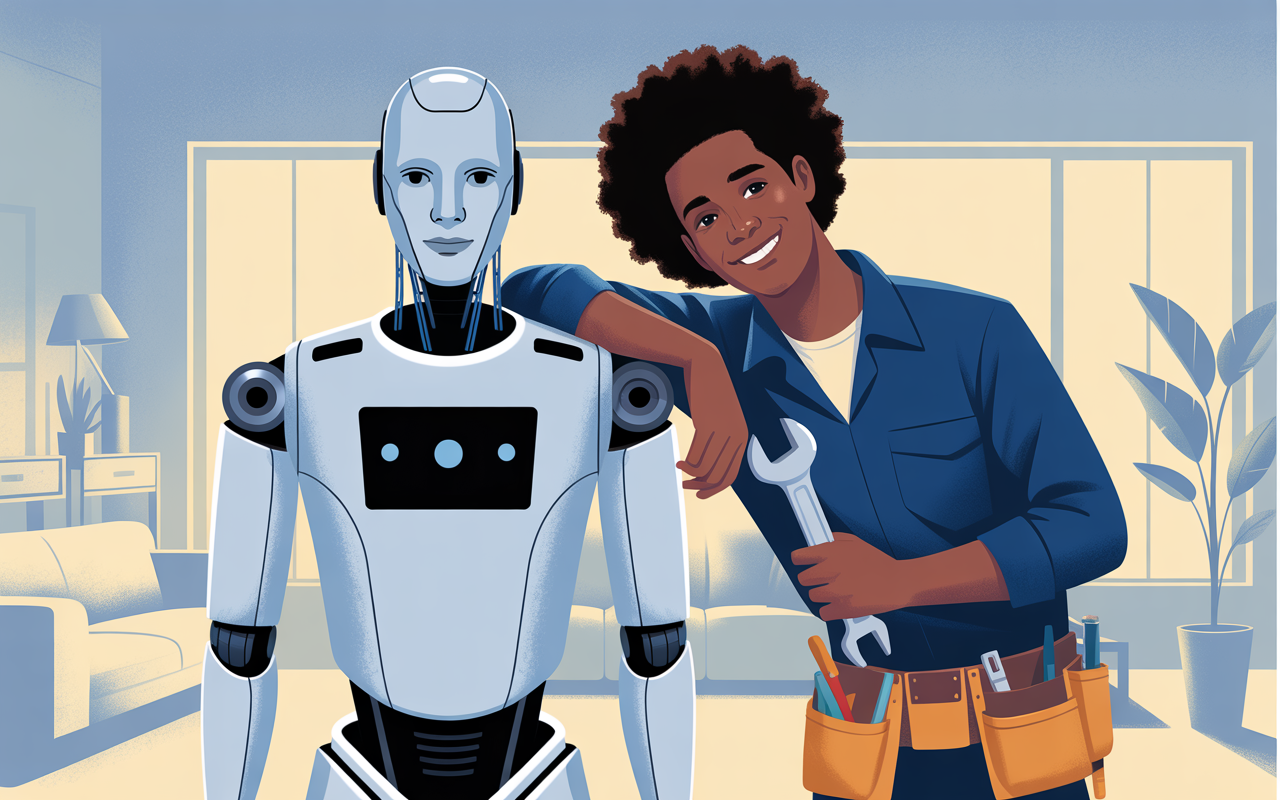
After writing about the consumer robots launching in 2026—1X NEO, Tesla Optimus, Figure AI—I kept thinking: what happens after they arrive? What kinds of jobs will these robots create?
You don’t need to look far back to see the pattern. When cars replaced horses, blacksmiths worried. Then mechanic shops appeared on every corner. When personal computers arrived, typewriter repairmen panicked. Then computer repair shops and IT support became entire industries. When smartphones launched, landline technicians saw the end. Then cell phone stores and app developers created millions of jobs.
Every new technology disrupts. Some jobs dwindle or fade out entirely. But new ones emerge—often in ways nobody predicted.
Consumer robots shipping in 2026 will follow the same cycle. The market will create opportunities across the board—charging accessories, replacement parts, liability insurance, technician certification programs, you name it.
But let’s focus on the 5 job categories that will emerge almost immediately once these robots start arriving at people’s doorsteps.
1. Robot Setup & Onboarding Specialists

NEO arrives at your house. It’s $20,000. The box is big. You’re intimidated.
Someone needs to unbox it, connect it to WiFi, sync it with your smart home, teach you the voice commands, and walk you through the basics. That’s not a 5-minute YouTube tutorial—that’s a service call.
This is exactly what happened when smart home devices launched. Ring doorbells, Nest thermostats, whole-home automation—people paid for installation because the technology was unfamiliar and expensive. Robots are the same, except more complex.
What this role looks like: A technician arrives, handles physical setup, configures network connections, runs initial calibration, demonstrates basic functions, and ensures the robot operates safely in the specific home environment.
Who’s positioned for this: IT professionals with consumer tech experience, smart home installers, anyone comfortable bridging technical setup with customer education.
2. Maintenance & Troubleshooting Technicians

Your $20k robot stops working. A hand servo malfunctions. The navigation system glitches. It won’t charge properly.
You’re not sending it back to the factory for three weeks. You need someone local who can diagnose the problem, order parts, and fix it—fast.
This is the “mechanic shop” moment. When cars became mainstream, local mechanics emerged because people needed convenient, reliable repair services. Robots will be the same. Consumers won’t tolerate downtime on expensive household equipment.
What this role looks like: Diagnosing hardware and software issues, replacing components (sensors, actuators, batteries), troubleshooting connectivity problems, performing firmware updates, and handling warranty claims.
Who’s positioned for this: Electronics technicians, appliance repair professionals, IT support with hardware experience, anyone willing to learn robotics troubleshooting.
3. Data Security & Privacy Consultants

Here’s the uncomfortable truth: NEO streams video to 1X’s servers for AI training. Your robot sees everything in your home—and that data goes somewhere.
Most people don’t understand this. They don’t know what’s being recorded, where it’s stored, who has access, or how to configure privacy settings. That’s terrifying for a $20,000 purchase.
Someone needs to explain it, set up privacy controls, manage data permissions, and ensure the robot operates within the owner’s comfort level. This is a trust issue, not just a technical one.
What this role looks like: Auditing robot data practices, configuring privacy settings, explaining what data is collected and why, setting up local storage options, and advising on security best practices.
Who’s positioned for this: IT security professionals, privacy consultants, anyone who understands both consumer tech and data protection regulations (especially GDPR-aware professionals).
4. Integration & Custom Automation Experts

People don’t just want a robot—they want it to work with their existing setup.
“Can it trigger my smart lights when it enters a room?” “Can it sync with my calendar and avoid cleaning during meetings?” “Can it integrate with my security system?” “Can it send me alerts through my preferred app?”
These aren’t out-of-the-box features. These are custom automation workflows—exactly the kind of work I do with n8n and Make.com, except now it involves a physical robot.
This is where IT professionals who understand automation have a massive advantage. You’re not just installing hardware—you’re building systems that connect robots to the rest of someone’s digital life.
What this role looks like: Building custom workflows, connecting robots to smart home ecosystems, creating automated triggers, integrating with business tools (for small businesses using robots), and optimizing robot behavior based on user needs.
Who’s positioned for this: Automation specialists, smart home integrators, IT consultants with workflow experience, developers comfortable with APIs and IoT devices.
5. Remote Operators (Human-in-the-Loop)

Here’s the reality nobody talks about: these robots aren’t fully autonomous yet.
1X’s NEO uses remote operators—real people watching through the robot’s cameras and controlling it for complex tasks. It’s training data collection disguised as a service. Every task a human performs remotely teaches the AI what “folding laundry” or “loading a dishwasher” looks like from a thousand angles.
This isn’t a temporary job. It’s the actual path to autonomy. Tesla’s using it for Optimus. Figure AI is doing the same. The bottleneck isn’t hardware—it’s data. And data comes from humans demonstrating tasks at scale.
What this role looks like: Operating robots remotely through teleoperation interfaces, performing household tasks via camera feeds and controls, providing real-time feedback to improve AI models, and managing multiple robot sessions simultaneously.
Who’s positioned for this: Anyone comfortable with remote work, gamers with strong hand-eye coordination, customer service professionals who can multitask, people willing to work flexible hours across time zones.
What This Actually Means
These aren’t hypothetical jobs. Within 6-12 months of NEO and Optimus shipping, people will be paying for these services because their expensive robots aren’t working the way they expected.
There’s a massive skills gap right now. A plumber can’t troubleshoot a robot. Most IT people don’t understand robotics. Nobody is positioned at the intersection yet—which means opportunity.
If you’re an IT professional, automation specialist, or service provider watching this space, 2026 is when you start positioning yourself. Not in five years. Not when robots are “fully autonomous.” Now—while the market is forming and nobody owns the category yet.
The robot support economy is coming. The question is: are you ready to be part of it?
Want to stay ahead of the robotics and automation curve? Subscribe at augustwheel.com or connect with me on LinkedIn where I’m documenting this transition in real-time.



Leave a Reply to Humanoid Robots in 2026: Meet Sprout, the Friendly Robot That Wants to Live Alongside You – August WheelCancel reply