
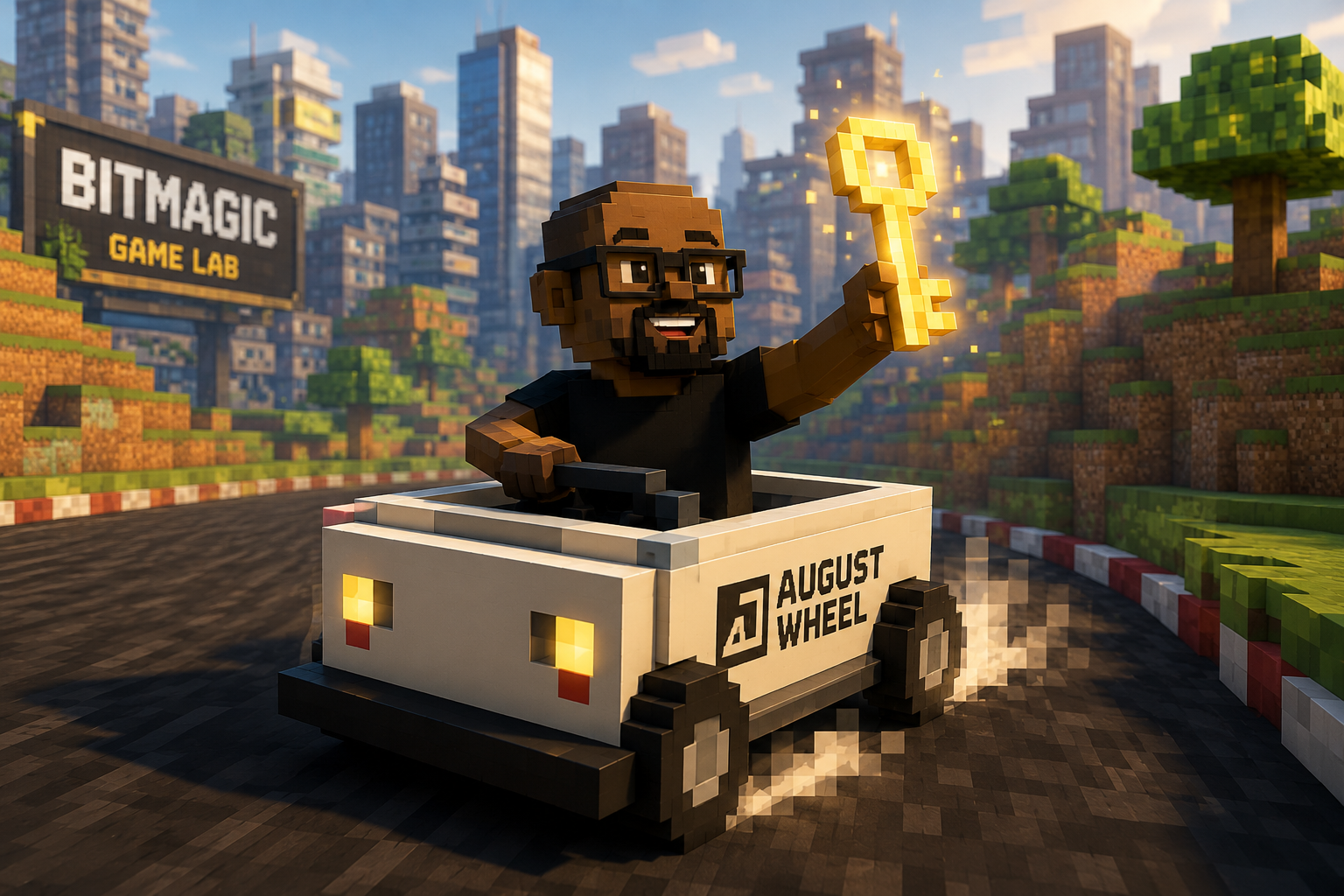
Two days ago I got an email saying I had been selected as one of the chosen creators for the Bitmagic Game Lab. I had applied earlier. The premise is simple and genuinely exciting: describe a game in plain text, and Bitmagic builds a playable 3D world around it. No engine. No code. No team. Just words. The only game I have ever shipped is Birdie, a bird identification game I vibe coded with Claude Code. So when they asked what I planned to build during the application, I typed: a racing game where the cars have weapons and can shoot each other. We will see how that goes.

What Bitmagic Actually Is
Bitmagic is a Finnish AI startup founded in 2022, originally under the name Roleverse. The original idea was to build a role playing game where one of the players acted as an AI game master. Somewhere along the way the team realised the underlying technology was bigger than that and pivoted to something more ambitious: a platform that lets anyone build a full game from a text prompt.
You describe the rules, the environment, and the objective. Bitmagic builds the code, physics, animations and assets in real time. The result is a fully hosted, playable web game you can share with anyone via a link. No downloads required on their end either.
The engine started on Unity but the team eventually built their own custom WebGL engine in TypeScript and Three.js because they needed the AI to be able to freely modify game code on request. Now the AI can change rules, environments, mechanics, and assets in real time. That decision matters more than it sounds. It means when you prompt a change mid-build, the engine actually responds rather than hitting a ceiling.
The platform has been gaining serious recognition. Bitmagic took the top spot in the Generative AI category at the Game Changers 2025 awards, a program run by Lightspeed Venture Partners and GamesBeat in partnership with Nasdaq, which recognises the most innovative startups in gaming and interactive media. Earlier this year, Arizona State University announced a partnership with Bitmagic to offer courses in AI-assisted game development, with students using the platform to go from no prior experience to building a distribution-ready game. That is not a small signal. When universities start building curricula around a tool, something real is happening.
The Game Lab and How It Works

The Game Lab is Bitmagic’s creator program. It is selective and application-based. You apply, tell them what you want to build, and if they like what they see, you get in.
Creators own all IP rights to their creations and are free to use and monetize their games as they see fit. That is worth underlining. You are not building inside someone else’s walled garden where they own what you make. Whatever comes out of this is mine.
The credit system works in three tiers. Tier 1 is where I am now: 10,000 Sparks worth $100 to start building. Tier 2 unlocks an additional 20,000 Sparks ($200) once you have spent your Tier 1 credits and published something on the Discord. Tier 3 unlocks 70,000 more Sparks ($700) for creators who build something impressive, whether that is high playtime, creative mechanics, or something the team simply loves. The total ceiling is $1,000 in credits if you earn your way through all three tiers.

The Discord is central to everything. It is where you can share games, get feedback, request features, and communicate directly with the Bitmagic engineering team. Joining via their Game Lab link gives you the Game Labs role, which is how they track who is active and eligible for tier upgrades.
I set up my account two days ago and joined the Discord. That is genuinely as far as I have gotten. But even just browsing the server you can see what others are building. People are creating adventure worlds, combat arenas, puzzle environments, and exploration games, all from prompts, all playable in the browser. Some of it looks rough around the edges, which is expected for a platform still in active development. Some of it looks surprisingly polished. The range is interesting.
What I Plan to Build
When the application asked what game I wanted to build, I did not overthink it. I wrote: a racing game where the cars have weapons and can shoot opponents.
Think Mario Kart energy but prompted into existence rather than coded by a team of Nintendo engineers over several years. There are a couple of similar games on there, so we’ll see how to build some nuance on mine. Whether Bitmagic can handle that kind of mechanic complexity is exactly what I want to find out. The weapons, the collision logic, the racing physics. These are not simple things to generate. But that is the point of the experiment.
My only prior game development experience is Birdie. I built it by vibe coding with Claude Code, which means I was writing prompts and letting the AI handle the implementation while I steered direction and tested outputs. It was genuinely one of the more enjoyable builds I have done. Bitmagic feels like a natural next step in that same direction, except now the entire game engine is the AI, not just the coding assistant.
What Happens After You Build

This is one of the things I find most interesting about the platform. Building is not the end of the story.
Games created on Bitmagic are fully hosted and can be published, shared and played by anyone. You get a link. You share it. People play it in their browser without installing anything. For a solo creator with no publishing infrastructure, that removes a significant barrier that would otherwise stop most projects from ever reaching an audience.
Beyond sharing, Bitmagic’s position on ownership is already clear: you own whatever you build, full stop. The IP is yours, and you are free to monetize your games however you choose. Bitmagic provides the engine and the hosting. What you do with the output is your business.
For someone like me who thinks in terms of content and community rather than game studios, the shareable link model is the part that makes this genuinely useful rather than just a fun experiment.
Is This the Future of Game Development?
Bitmagic’s CEO Jani Penttinen has made the comparison himself: what YouTube did for video production, Bitmagic wants to do for game development. Three billion people play games. A tiny fraction of them have ever made one. The barrier has always been technical skill, time, and money. Bitmagic is attempting to remove all three at once.
I am not going to call it the future based on two days of Discord browsing and zero games shipped. That would not be honest. What I will say is that the access I got feels like being handed a tool that should not exist yet. The question of whether it actually works the way it promises is exactly what I intend to find out.
I will document the whole thing here. The racing game with weapons. The prompts I try. What breaks. What surprises me. If you want to follow along as I figure out whether a non-game-developer can build something worth playing with a text prompt and $100 in AI credits, the newsletter is where I will post updates first.
FAQ
What is Bitmagic and how does text to game AI work? Bitmagic is an AI-powered platform that converts plain text descriptions into fully playable 3D browser games. You describe the game you want including the environment, rules, and objectives, and the platform generates the code, assets, physics, and animations in real time. The result is a hosted game playable via a shareable link with no download required.
How do you get access to the Bitmagic Game Lab? The Game Lab is application-based. You apply at bitmagic.ai, describe what you plan to build, and the team reviews applications and selects creators. Accepted creators receive starter credits and access to a Discord community with Bitmagic engineers. Spots are limited and the program is selective.
What can you actually do with a game once you build it on Bitmagic? Once built, your game is hosted by Bitmagic and shareable via a direct link. Anyone can play it in their browser without downloading anything. Creators own full IP rights to what they build and are free to use and monetize their games however they choose.
Join The Wheels of Ai and Automation
A monthly drop of curated news, practical prompts, and how‑to guides—plus first dibs on workshops.


Leave a Reply