

Building Apps Without Traditional Development Skills
TLDR
- Definition: Vibe coding uses AI (like large language models) to generate code from natural language descriptions—you describe your vision, AI builds it, you manage the process
- Why it matters: Democratizes app building by lowering the barrier to entry; anyone with an idea and patience can build applications without traditional coding knowledge
- Personal proof: Built multiple applications (Birdie, ReadRecall, TaskCocoon) in just months despite not being a traditional software developer
- The role shift: You become a project manager for AI—prompting, guiding, testing, refining—rather than writing line-by-line code
- Real-world results: Faster prototyping, iteration driven by feedback, and less perfectionism-induced burnout
What Is Vibe Coding?
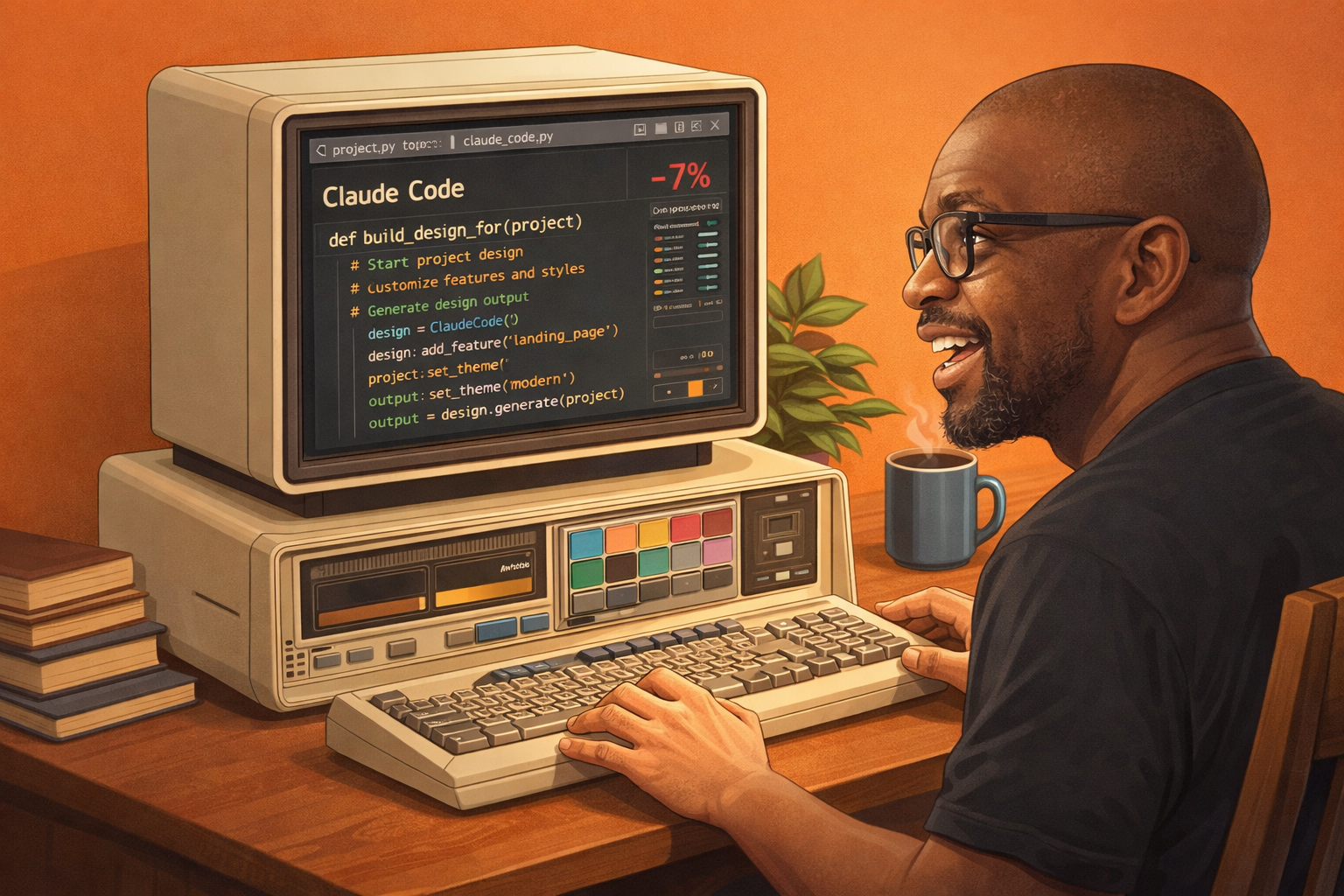
“Vibe coding” is everywhere right now. Google Trends shows search interest has risen significantly over the past 12 months. I’m not a traditional software developer—not by a long shot—but with vibe coding, curiosity, and patience, I built several applications in just months. So what exactly is vibe coding? It’s using AI like large language models to generate code from natural language descriptions. What does that even mean? It means, instead of writing line-by-line code, you describe your vision using natural language and let AI build it. You become the project manager—prompting, guiding, testing, and refining the AI’s output. It lowers the barrier to entry, speeds up development, and shifts the role from coder to curator. And honestly? It works.
To be specific about what a vibe code actually is: it’s the natural language prompt or description you give an AI model to generate code. Instead of saying “write a function that iterates through an array,” you might say “I need an app where users can upload their favorite books and get AI-powered summaries.” That description—that “vibe”—is what the AI uses to build the application. You’re not writing code; you’re describing outcomes and letting the AI handle the implementation.
Why Do They Call It “Vibe Coding”?
The term “vibe” is intentional. Traditional coding is methodical, precise, line-by-line. You need to understand syntax, logic, frameworks, architecture. It’s rigid. Vibe coding is the opposite—it’s intuitive, feeling-based, and flexible. You’re coding by intuition, by what “feels right” for your application. You describe the vibe or experience you want users to have, and the AI translates that into functional code. It’s about capturing the essence of what you’re building rather than sweating the technical details.
That shift matters because it makes building accessible. You don’t need a computer science degree. You need an idea, the ability to describe it clearly, and the patience to test and refine until it works.

Can ChatGPT Vibe Code? (And What About Other AI Tools?)
Yes. ChatGPT, Claude, and other large language models are the foundation of vibe coding. These AI tools can generate functional code from natural language descriptions with remarkable accuracy. They can help you build frontends, backends, databases, and entire workflows. But here’s the important part: the AI isn’t magic. It’s a tool you’re guiding. You describe what you want, the AI generates a first version, you test it, you give feedback, and it refines. That iterative loop—prompt, test, refine, repeat—is where the real skill lies. You’re not just typing prompts into ChatGPT and walking away. You’re actively managing the development process.
How to Start With Vibe Coding
Here’s the simple path: First, identify what you want to build. It can be something for yourself, your business, your friends, a group, your clients, or even an audience. Second, describe it clearly to an AI tool. Be specific about what it does and how users interact with it. Third, let the AI generate code. Fourth, test it. Fifth, give feedback and iterate. That’s it. You’re not learning programming languages. You’re learning how to communicate clearly with AI and how to test and refine outputs.
The barrier to entry is remarkably low. I didn’t have a traditional development background when I started building with this approach. I built Birdie, a game, by describing the mechanics I wanted. I built ReadRecall by describing how users would interact with content they wanted to remember. I built TaskCocoon by envisioning how teams would collaborate on tasks. Each one started with a vibe—a feeling of what the app should be—and the AI helped me build it. That said, it can be a bit complex to set up your environment, debug codes or fix issues, and deploying. But we’ll tackle that in a different article.
Building Together
This is why I’m launching community meetup sessions focused on vibe coding. We’ll build real applications together. You’ll learn how to describe your vision, work with AI, test, break things, fix them, and iterate. You’ll walk away with working applications you actually need—for yourself, your business, your side project, or your clients.
If you’re interested in learning this skill by building real things with real people, subscribe or follow for updates on the first sessions. We’ll be building, breaking, and fixing applications together.
Ready to vibe code? Follow along as we launch these sessions. The barrier to building is lower than it’s ever been—now’s the time to build what you’ve been thinking about.


Leave a Reply to Top 4 Vibe Coding Platforms Reviewed: Lovable to Base44 – August WheelCancel reply