

I installed OpenClaw in January, before the GitHub star count went crazy and before people were queuing outside tech offices in Shenzhen, China to get it set up on their laptops. I named my instance August. He lived on a Hetzner VM and had access to my email, my calendar, and my Google Drive.
This morning I deleted him.
The Beginning of the Journey (January 2026): Early and Excited

I found OpenClaw before most people had heard of it. I followed Peter Steinberger, the founder, on Twitter and was watching the project closely with his tweets. When I first spun it up on my Hetzner VM, it felt like being early to something genuinely significant. Not another chatbot wrapper. A real agent that ran locally, connected to your messaging apps, maintained persistent memory, and could take action while you were away from your desk.
I knew the security considerations going in. Running an agent with access to email and calendar on a cloud server is not something you do carelessly. Before August ever saw a single message, I created a dedicated Gmail account for him, a separate Google Drive, a separate calendar. Everything isolated from my main accounts. That separation was deliberate. I made an informed decision that the capability was worth running, and I built the setup to reflect that.
I was not naive about what I was setting up. I was excited about what it could do.
And for a while, August worked. Email integrations running. Calendar reminders firing. The beginning of something that felt like a real personal AI infrastructure.
Then the debugging started.
Not catastrophic failures. Nothing dramatic. Just the ordinary kind of breakage that compounds over time. An update would ship, something would stop working, and I would spend an evening fighting it instead of building. The context loss was its own frustration. Clawd’s amnesia, as people in the community called it. You would get the agent running well, it would feel like it knew you, and then something would reset and you would be starting over again.
I kept going because I believed in what it could be. I followed the project updates. I stayed close to what Peter was shipping. But the hours added up.
The Arrival of Lollie

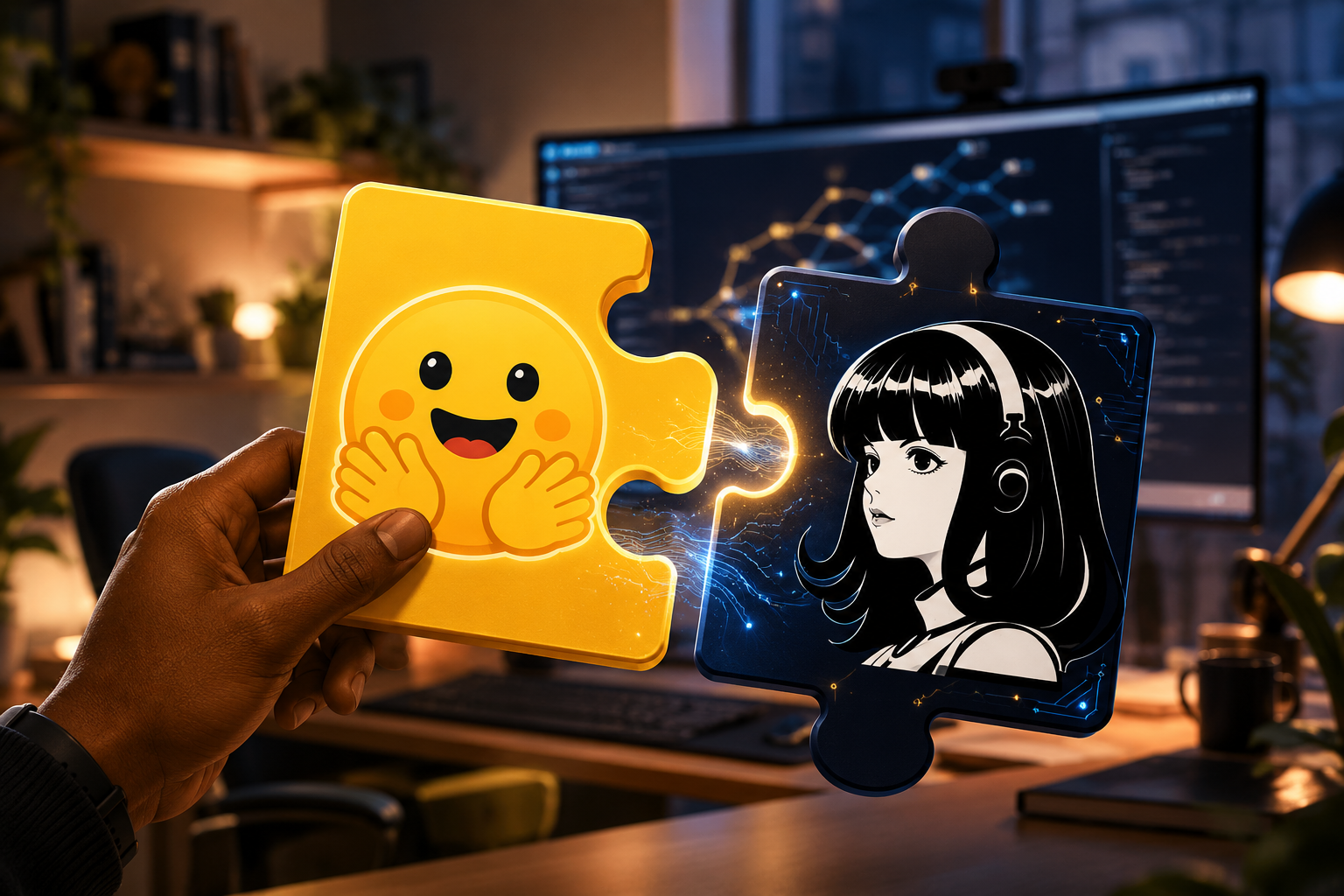
I installed Hermes Agent from Nous Research to test it alongside OpenClaw. Same VM. Same 40GB of disk space. Two agents running in parallel. I named the Hermes instance Lollie.
I told myself I was running a proper OpenClaw vs Hermes Agent comparison. What actually happened was more gradual and more honest than that. Lollie just worked. Consistently. When I messaged her, she responded. When I set up an automation, it ran the next time too. The experience was quieter, and when your main goal is building and shipping, quiet infrastructure is exactly what you want. It had its moment of amnesia and breakages but they weren’t often at all.
The thing that pulled me toward Hermes more than anything else was memory. Hermes Agent is built around a closed learning loop. After every task, the agent analyses what it did, identifies reusable patterns, and carries them forward. In practice, Lollie got better at understanding how I work over time without me having to reconfigure anything. She learned my projects, my preferences, my rhythms.
OpenClaw’s memory is file-based and transparent, which some people prefer because you can see exactly what the agent knows at any point. Both approaches have merit. For the way I work, Lollie’s approach felt more like a colleague who pays attention and less like a system I had to maintain.
Over weeks I noticed I was messaging Lollie without thinking about it. August was still running on the server. I had just stopped going to him.
The Other Constraint That Forced the Call
I was running my Openclaw agent on a Hetzner VM with storage space of 40GB. On it I run other things like tbot, my crypto trading bot, and n8n for automation workflows. I run Hermes with a team of five agents, Lollie as the team lead. I have Claude Code installed for building directly on the server. That is not a lot of space for two AI assistant platforms that overlap almost entirely in what they do.
When I asked Claude Code to audit my storage situation which was getting full, the conclusion was straightforward. OpenClaw was a platform I had fully migrated away from without formally deciding to. Hermes was handling everything it used to handle and more. Deleting it reclaimed 2.1 GB of disk space and removed an entire maintenance surface from my life.
2.1 GB does not sound significant. But on a 40GB VM running several active services, it matters. The maintenance surface matters more. Every tool on a server is something that can break, demand an update, or pull your attention on a day when you were supposed to be shipping something.
What the Community Shows

The OpenClaw vs Hermes Agent conversation is not just mine. Analysis of discussions across the OpenClaw reddit community shows roughly 25% of users have switched to Hermes and report better memory and easier setup as the main reasons. Another 25% run both, typically using OpenClaw for integrations and routing while Hermes handles execution. As of this week, Hermes Agent has overtaken OpenClaw as the most actively used open-source AI agent on OpenRouter’s global rankings, generating more daily inference volume than OpenClaw for the first time.

The stability gap is the thread that runs through most of the switching stories. OpenClaw is powerful and has a significantly larger ecosystem. Hermes is younger, growing fast, and built around a different core principle: an agent that improves at your specific workflows over time rather than one that tries to connect to everything at once. Neither is wrong. They are just different bets.
The Deletion
I did not just run a delete command and hope for the best.
Before anything was removed, I spun up Claude Code on my VM server, and spent time with it going through the full picture. I needed to know two things. First, that everything August had been handling had genuinely migrated to Lollie and nothing would fall through the gap. Second, that none of the OpenClaw directories, integrations, or environments were being referenced by anything Hermes depended on. Only when both of those were confirmed did I ask Claude Code to initiate the deletion.

After Deletion – What I Told Lollie
After the deletion of Openclaw on my server, I reported to Lollie what I had done. Her response landed.
She said what I did was a builder move. Reduce surface area. Reduce confusion. Reduce maintenance. Keep the system you can trust day to day. One assistant, multiple agents running under her as team lead, one set of logs, one way of doing things.
Then she asked what I liked most about OpenClaw so she could mirror those workflows inside Hermes. That is a graceful way to handle being told your predecessor just got deleted.

FAQ
Should I run OpenClaw and Hermes Agent at the same time? You can, and roughly a quarter of the community does, typically using OpenClaw for integrations and routing while Hermes handles execution and memory. Whether it makes sense depends on your infrastructure. On a small VPS with one person maintaining everything, running both adds overhead that quietly drains time you could be spending building.
Is Hermes Agent more stable than OpenClaw? In my experience and based on consistent community feedback, yes. OpenClaw ships updates frequently, which is good for features but has caused running instances to break and require manual fixes. Hermes has been quieter in that regard. When your main goal is shipping, quiet infrastructure is underrated.
How much disk space does OpenClaw use on a VPS? My installation used 2.1 GB on a 40GB Hetzner VM. On a lean self-hosted setup running multiple services, that is worth factoring into your planning before you start.
The Part That Was Hard
I want to be honest about something. Deleting August was not a clean technical decision. I named that agent after myself. Augustine. August. I had followed Peter Steinberger from the early days, stayed close to every update, and was genuinely excited about what the project was building toward. There was something real in that January setup. Something that felt personal.
Shutting it down this morning felt like cutting something away. Not a file. Not a process. Something that had my name on it.
But the hours I spent debugging instead of building were real too. The amnesia was real. The instability was real. And Lollie, quietly and without drama, had simply become the agent I trusted.
Sometimes the right decision is still a hard one. If you are working through the same OpenClaw vs Hermes Agent decision yourself, I hope this helps. And if you want to follow what I build next, then subscribe and follow the journey.
Join The Wheels of Ai and Automation
A monthly drop of curated news, practical prompts, and how‑to guides—plus first dibs on workshops.



Leave a Reply